Navigating omnichannel conflict in a competitive digital economy.
A team pitch for ECON-1576 Strategic Games for Business, analysing Beiersdorf’s position against Unilever in Vietnam’s skincare market, using a simultaneous-move game with repeated interactions, mixed-strategy analysis, and Bayesian equilibria.
The strategic problem we were given.
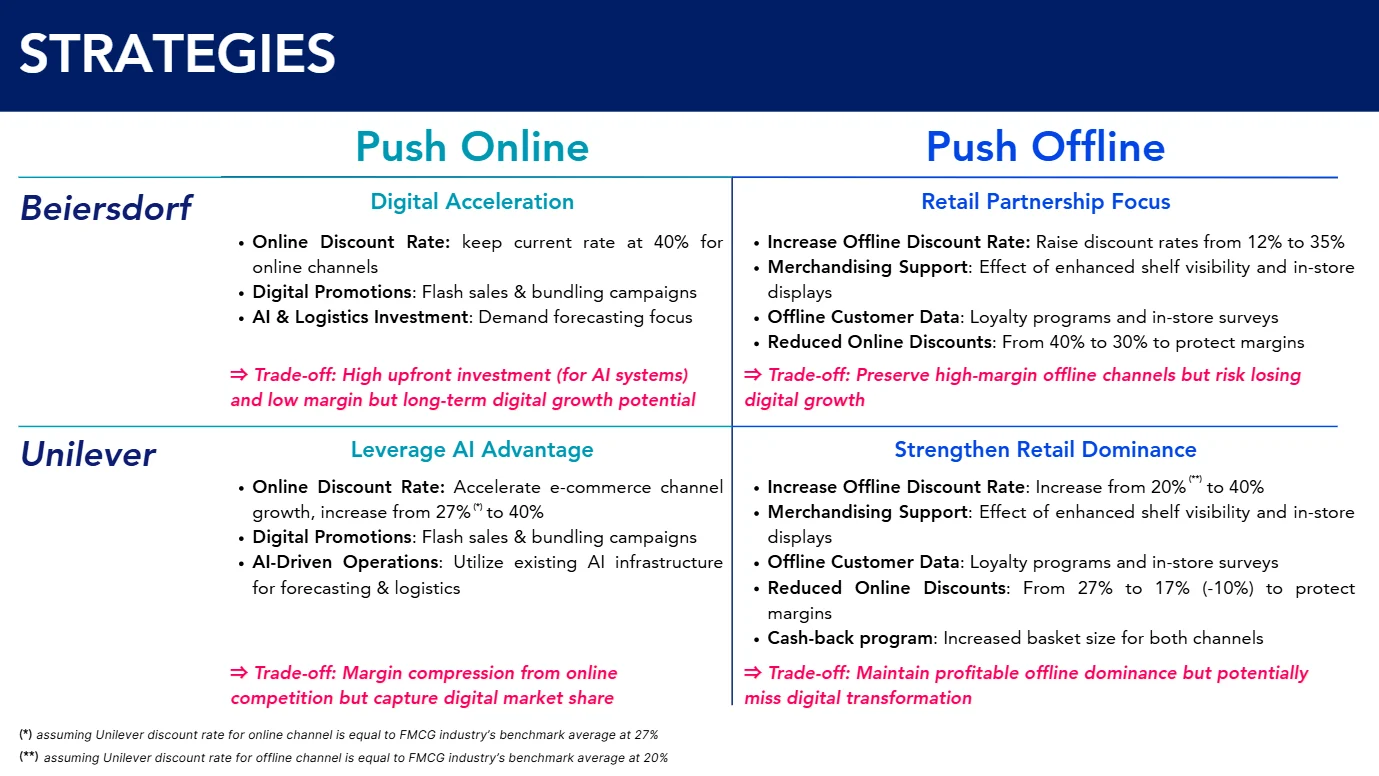
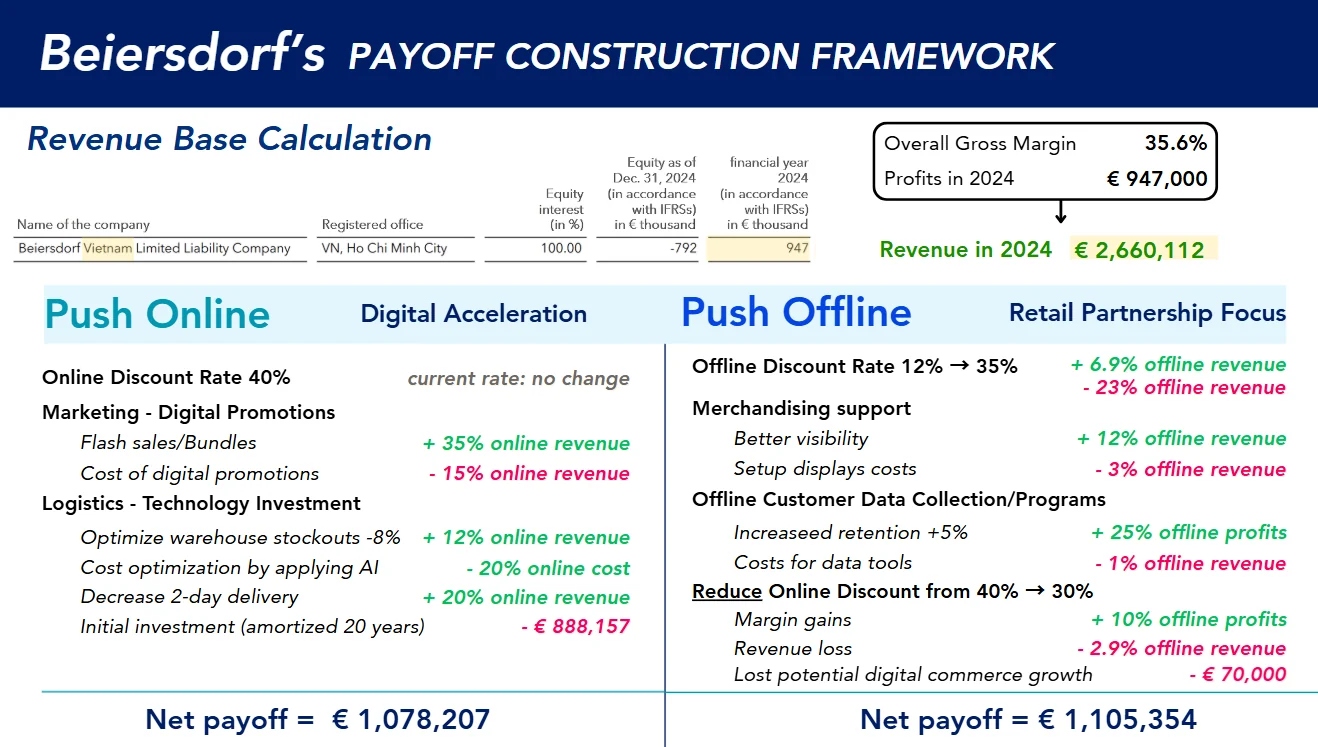
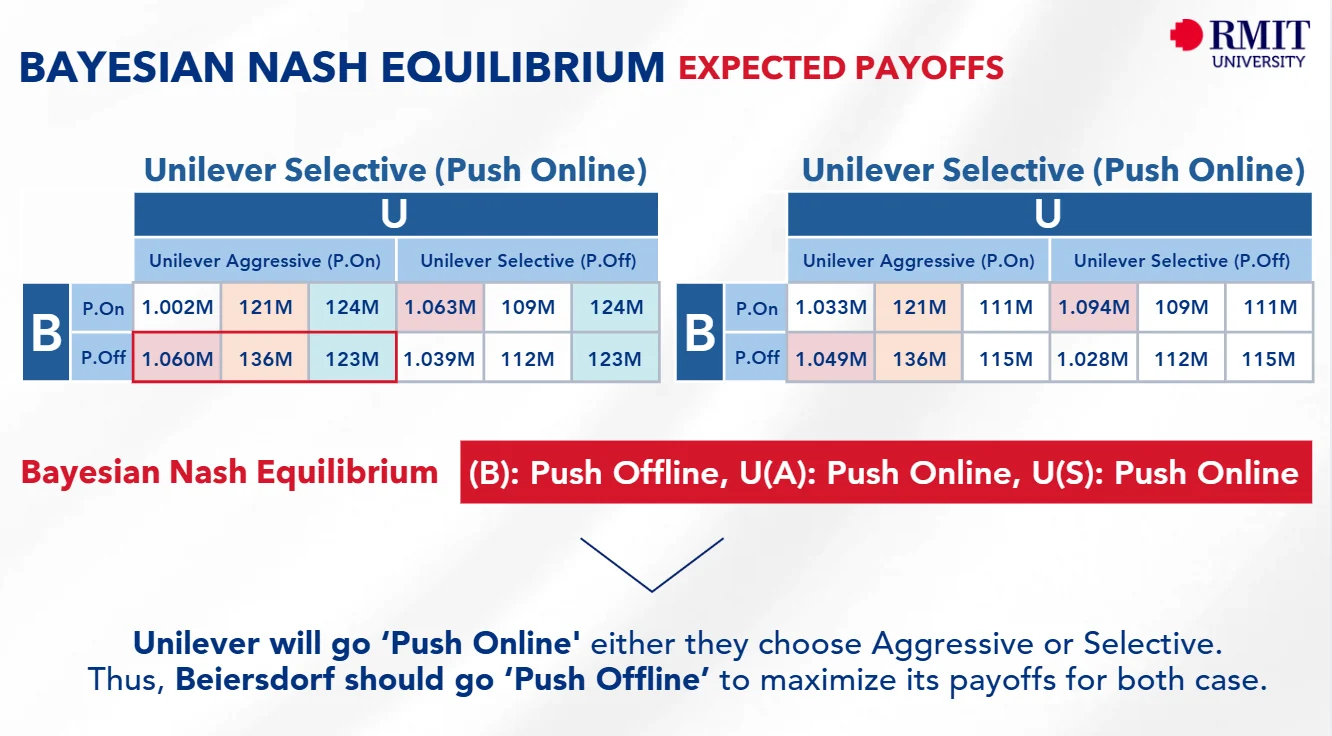
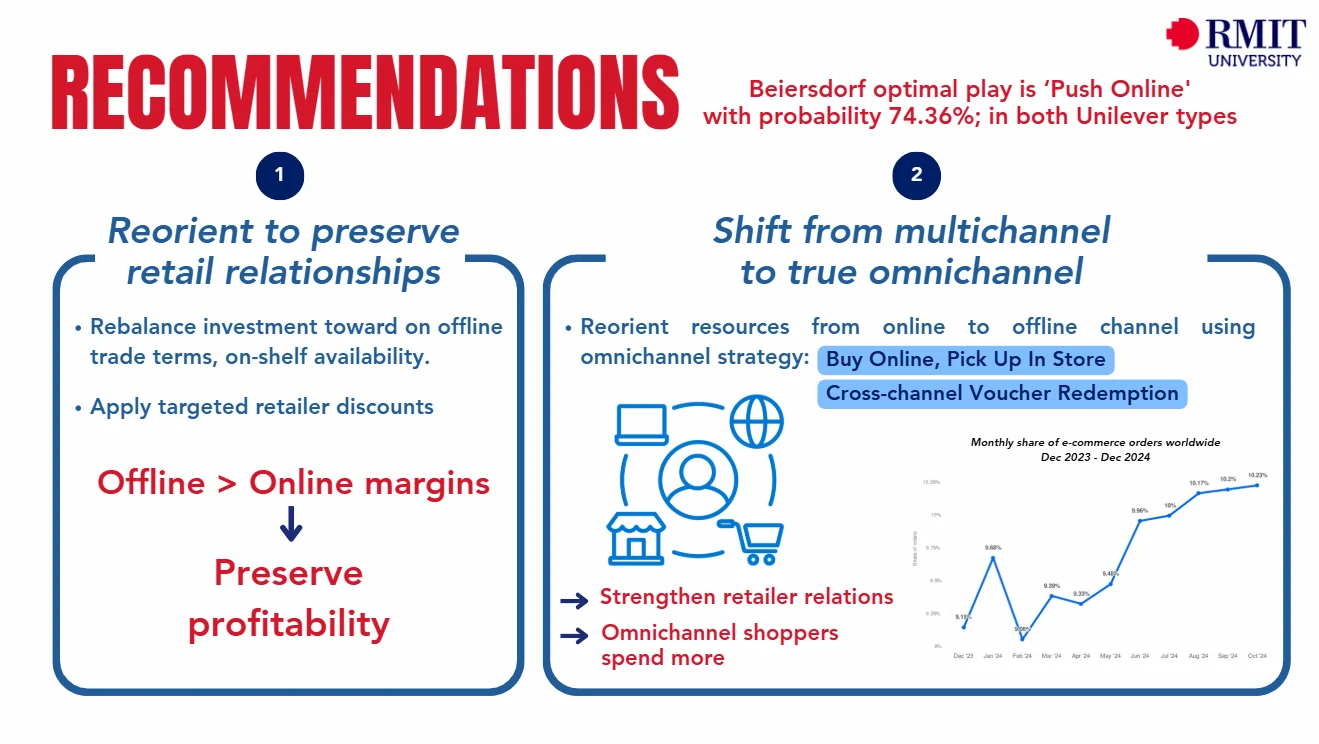
Vietnam’s FMCG market presented a clear strategic tension for Beiersdorf: online channels were expanding faster, while offline channels still offered higher margins and stronger retail economics. Rather than treat this as a simple binary choice, our analysis modelled the problem first as a mixed-strategy game under complete information, then extended it through Harsanyi transformation into a Bayesian game under uncertainty about Unilever’s type. Sensitivity analysis was used to test how stable the recommendation remained under changing cost and channel assumptions. Together, the analysis supported an omnichannel recommendation shaped by both profitability and strategic uncertainty.
How we got from a market map to a defended recommendation.
How a competitive question became a recommendation we could defend.
Find the real trade-off.
Mapped the overlap between Beiersdorf and Unilever across shared skincare categories and converging channels in Vietnam’s FMCG market. The trade-off was clear: online channels grew faster, while offline channels stayed more profitable and mattered more for keeping retailers on side.
Turn the trade-off into a game.
Framed the decision as a simultaneous-move, repeated game in which both firms had to choose between pushing online or preserving offline strength. Built the payoff structure around channel economics, investment costs, competitive response, and profitability.
Test the recommendation under pressure.
Solved for mixed-strategy Nash equilibrium, then tested how the result changed under different assumptions about technology investment intensity and offline discounting. This helped identify which parts of the recommendation were stable and which depended heavily on assumptions.
Refine for uncertainty, then recommend.
Extended the model into a Bayesian game by considering different possible Unilever types, then used those outcomes to refine the strategic recommendation. The final recommendation was to move toward omnichannel execution while protecting the profitable offline relationships, rather than switching channels outright.
Four slides from the deck.
The result, stated precisely.
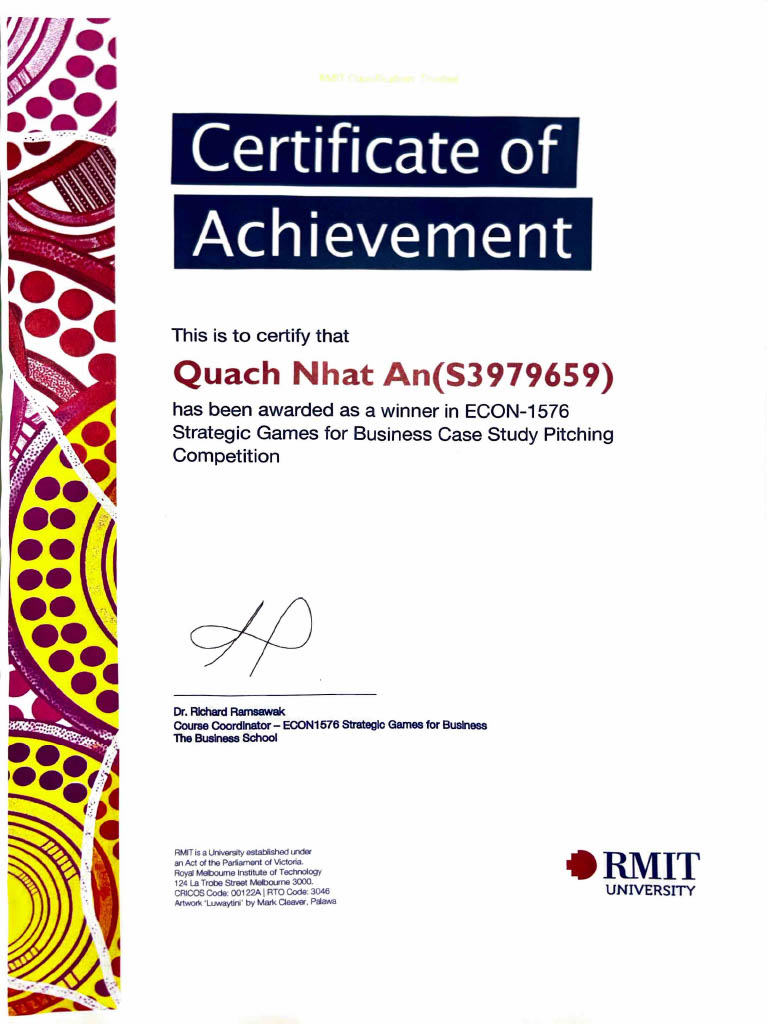
Selected as one of three winning teams from more than 17 competing groups. No official ranking was given among the three.
Competing groups, judged live by Beiersdorf regional representatives and company employees.
I led the team and owned the analytical work. Slide production, delivery and Q&A were shared across all of us.
What was mine, and what was the team’s.
- Game framing, payoff construction, Nash and Bayesian equilibrium.
- Sensitivity analysis, recommendation development, and presenting the final recommendation.
- Team lead of a three-person team.
- Slides, delivery and Q&A — shared across all three of us.
- Selected as one of three winning teams from more than 17 groups. No ranking was given among the three.
ECON-1576 Strategic Games for Business, RMIT University Vietnam, July 2025.
- Shows a formal model turning into a recommendation that industry judges accepted.
- It was a course assignment. Beiersdorf never acted on it, and nothing was at stake if we were wrong.
- Taught me to give the decision first and explain the method afterwards.
Title. Beiersdorf vs Unilever — omnichannel conflict in Vietnam’s skincare market.
Author. Three-person team submission. An Quach — team lead and analytical lead.
Date. RMIT University Vietnam, July 2025. Judged by Beiersdorf.
Why. It is where I had to explain the analysis to people from the company and answer for it.
Career relevance. Shows economic analysis becoming a recommendation defended to industry.